


Bullet vs Blitz vs Rapid: Which Chess Time Control Should You Play?
Bullet, Blitz, or Rapid? This guide breaks down the real differences between chess time controls — what each one trains, who it's best for, and how to pick the right format for your online chess games.
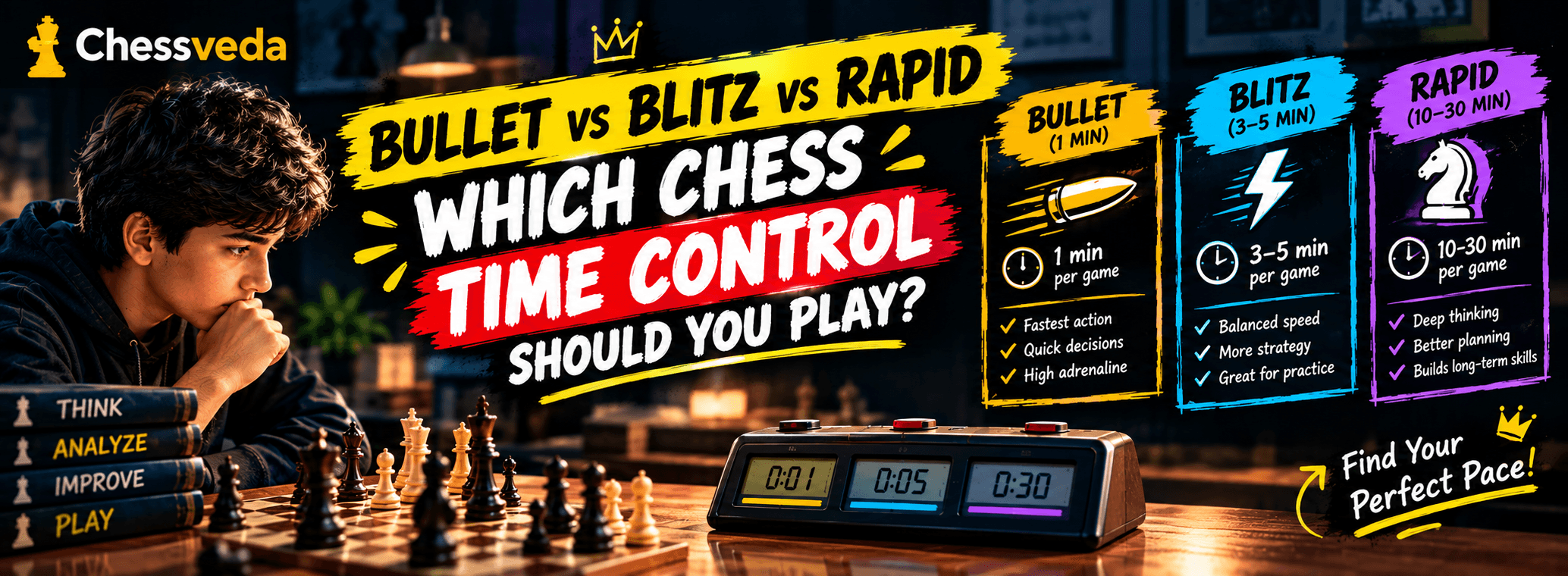
Bullet vs Blitz vs Rapid: Which Chess Time Control Should You Play?
First time you open a chess app, there's a decision you have to make before you even see a board: how much time do you want on the clock. One minute? Five? Ten? It sounds minor. It isn't.
If you've been playing online chess games for a while, you already know the format changes the whole experience. Same rules, same pieces, completely different game. I'll walk through Bullet, Blitz, and Rapid the way I'd explain it to a friend picking their first time control.
Time Control, in Plain Terms
It's just how long you have to make every move in the game, combined. Run out, and you lose on the spot - doesn't matter if you're one move from checkmate. That single rule is what separates these three formats from each other, not the pieces or the board.
Bullet: One Minute, No Thinking Allowed
Bullet chess gives each player roughly a minute. Sometimes there's a small increment tacked on, sometimes not. Either way, you're playing an entire game - opening to endgame - in under two minutes combined.
It's chaos, honestly. Half the time nobody's actually calculating anything, they're just moving pieces fast enough to not flag. And somehow it's still fun.
Who it works for:
Players who already know their openings cold and just want reps
Anyone looking to sharpen reaction speed
A quick way to unwind after work
Who it doesn't work for: Beginners, mostly. If you're still figuring out why a knight on the rim is bad, bullet won't teach you that. There's no time to think, so there's no time to learn.
Blitz: The One Everyone Actually Plays
Blitz sits around 3-5 minutes per side, and it's easily the most popular format on most platforms. There's a reason for that.
You get just enough time to think without the game dragging on forever. A few games during a lunch break, a quick match before bed - blitz fits into life better than the other two.
What it's good for:
Testing an opening you just read about without committing 20 minutes
Building intuition - you start recognizing good moves instead of calculating them from scratch every time
People who want speed but not total chaos
Where it falls short: If you tend to panic once the clock gets low, blitz will expose that fast. And it's still too quick for working out a complicated endgame properly.
Rapid: Where You Can Actually Plan Something
Rapid usually runs 10 to 30 minutes a side. This is closer to what you'd picture from a tournament - people sitting, thinking, occasionally staring at the board for a full minute before moving.
It's slower, sure. But that's the point. You get room to spot a tactic before you play it instead of after, room to think through pawn structure, room to not blunder your queen because you were rushing.
If you actually want to get better at chess - not just play more games, but improve - most of your time should probably go here. It's the format where lessons stick.
Good for:
Beginners who want to learn while playing, not just survive
Working on real strategic ideas instead of pure reflex
Anyone trying to climb their rating steadily instead of just grinding volume
Not ideal when: You've only got ten minutes free and want to squeeze in a full game - a single rapid match can eat your whole break.
Quick Side-by-Side
Format Time Per Player Best For What It Trains Bullet ~1 minute Speed, fun, warm-ups Instinct Blitz 3-5 minutes Daily play, casual sessions Intuition Rapid 10-30 minutes Real improvement Strategic thinking
So Which Should You Pick?
Depends what you're after, honestly, not how good you are.
Got five minutes and just want to play something? Bullet. Want a real game without losing half an hour? Blitz. Actually trying to get better? Rapid, most of the time.
Most people who stick with chess long-term don't pick one and stay there forever. They rotate - Rapid when they're serious about improving, Blitz for the daily habit, Bullet when they just want to mess around.
One thing worth saying if you're new: skip bullet at first, even though it looks like the fun one. Slower games teach you why a move works, not just that it does. Once that's actually in your head, the fast formats hit different - because now you understand what you're doing instead of guessing quickly.
Try Them Yourself
Reading about time controls only gets you so far. Pick one, start a game against a bot or a real opponent, and see how it actually feels under your own clock.
Each format works a different muscle. Knowing which one to reach for - that's most of the advantage right there.
Got a time control you always come back to? Jump into a game and see where you actually play your best chess.
These formats are also how most online events are run — Chessveda's arena tournaments use fast clocks and streak scoring, so your favourite time control is probably already a tournament format there.
More from Blogs
Chess Puzzles for Beginners: 6 Mistakes That Make You Fail (and How to Fix Each)
Stuck on chess puzzles for beginners? Fix the 6 mistakes that make you fail — guessing, rushing and peeking — with a simple 15-minute daily routine.
Online Chess Tournaments in India: How to Join Your First One
Want to play an online chess tournament in India? Timings in IST, Swiss, Arena and Knockout formats, entry details, and a step-by-step guide to your first match.

7 Fun Ways to Play Chess Online With Friends (When Normal Games Get Boring)
Bored of normal games? Try 7 fun chess games to play with friends online — handicaps, rematch ladders, puzzle races and winner-stays-on, with rules for each.
Comments(0)